
"Streaming cable service" usually means one thing: an app that replaces a cable subscription with live channels delivered over the internet, instead of a coaxial line into your house. There's no single "best" one across the board — the right pick depends on which channels you actually watch, since every service negotiates its own lineup and none of them carry everything.
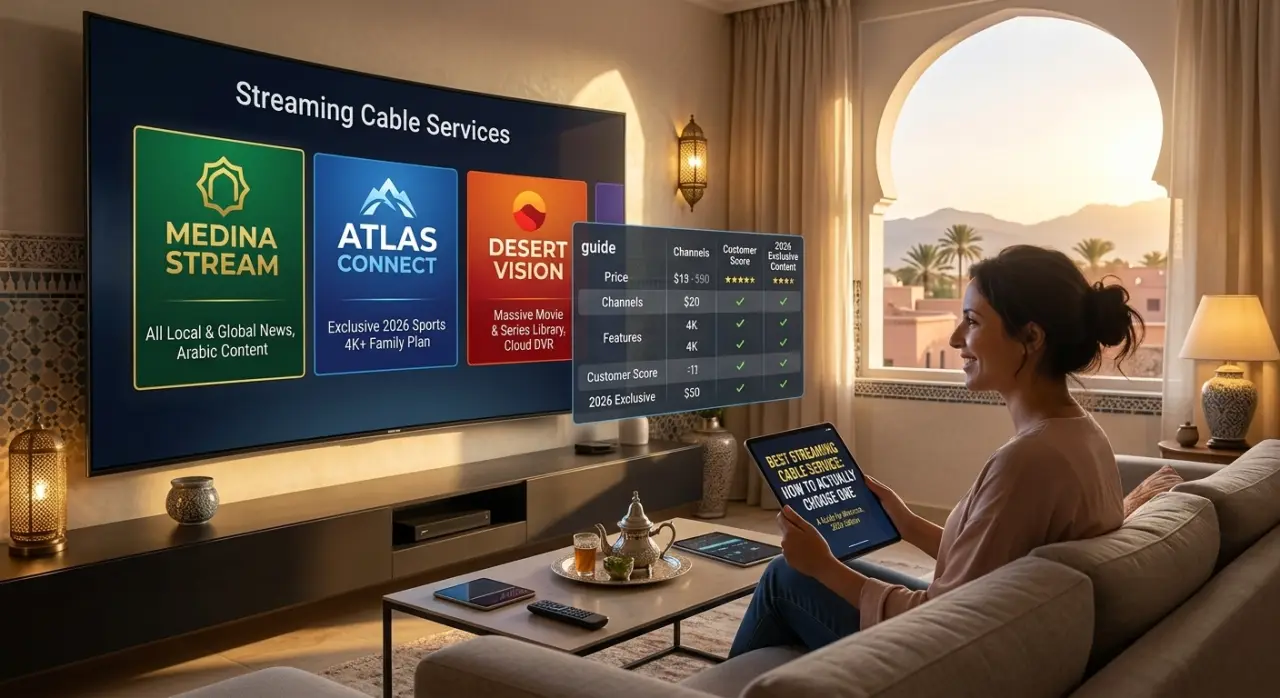
What a Streaming Cable Service Actually Is
A streaming cable service — sometimes called a virtual MVPD, or just a "cable replacement" — licenses the same live channels a cable company would carry, then delivers them through an app over your existing internet connection. You get a channel guide, live viewing, and usually some form of cloud DVR, without a technician running a line to your house or a cable box to rent.
Each one negotiates its own deals with networks, which is the single biggest reason there's no universal "best" answer: one service might carry a regional sports network another doesn't, or price a sports-heavy tier differently from a news-and-entertainment-focused one.
What to Compare Before Choosing One
- Your specific must-have channels. Check the actual current channel lineup for the exact networks you watch — a large total channel count means nothing if the one you care about isn't included.
- Local channels. Local network affiliate availability (ABC, CBS, NBC, FOX, etc.) varies by media market, not just by service — confirm coverage for your specific city before signing up.
- Cloud DVR limits. Storage hours and how long recordings are kept before expiring vary by service and by plan tier.
- Simultaneous streams. How many devices can watch at once on one account — this matters more for multi-person households.
- Contract terms. Most streaming cable services are month-to-month with no long-term contract, which is one of their main advantages over traditional cable — but confirm this for the specific plan you're considering.
- Current price after any promotional period. Introductory pricing is common; check what the regular monthly rate becomes afterward.
Cable-Replacement Services vs. IPTV
Streaming cable services and IPTV subscriptions both deliver live channels over the internet instead of a cable line, which is where the confusion usually starts. The real difference is in how each is built: a cable-replacement service licenses a fixed lineup directly from networks and sells it as a single branded product with one channel guide. An IPTV subscription is typically a broader aggregation, often covering a much larger international channel count than any single cable-replacement service carries. Our full comparison of streaming cable services and IPTV goes through this distinction in more depth.
How to Actually Decide
- List the specific channels you'd cancel cable to keep — not categories, the actual network names.
- Check each candidate service's current lineup against that list, including local affiliate coverage for your city.
- Compare the regular (non-promotional) monthly price across your shortlist.
- Check simultaneous-stream and DVR limits against your household's actual usage.
- Since most are month-to-month, trial the top candidate for a billing cycle before assuming it's the right long-term fit.
If what you're really after is a much broader channel lineup than any single cable-replacement service offers — including a large international selection — a general IPTV subscription like GetTV.online is built around 40,000+ live channels and 150,000+ movies and series instead of one network-negotiated bundle. Request a free trial to compare it directly against a cable-replacement shortlist, or see our setup guide for getting it running on your devices.
FAQ
What exactly is a streaming cable service?
An app that delivers live TV channels over the internet instead of a cable line, licensing a fixed lineup directly from networks the same way a cable company would.
Is there one single best streaming cable service?
No. Each service negotiates its own channel lineup and pricing, so the best fit depends entirely on which specific channels and local networks you need covered.
Do streaming cable services require a contract?
Most are month-to-month, which is a core advantage over traditional cable — but confirm the specific terms for whichever plan you're considering before signing up.
What's the difference between a streaming cable service and IPTV?
A streaming cable service is a single branded product with a network-licensed lineup. IPTV is typically a broader aggregation covering a much larger channel count, often including extensive international content. See our streaming cable vs. IPTV comparison for the full breakdown.
Will a streaming cable service have my local channels?
It depends on your specific media market, not just which service you pick — local network affiliate coverage varies by city, so confirm it directly for your location before subscribing.
Does GetTV.online work as an alternative to a streaming cable service?
Yes, with a much broader channel count than a typical single cable-replacement service. Request a free trial to compare it against your shortlist.