
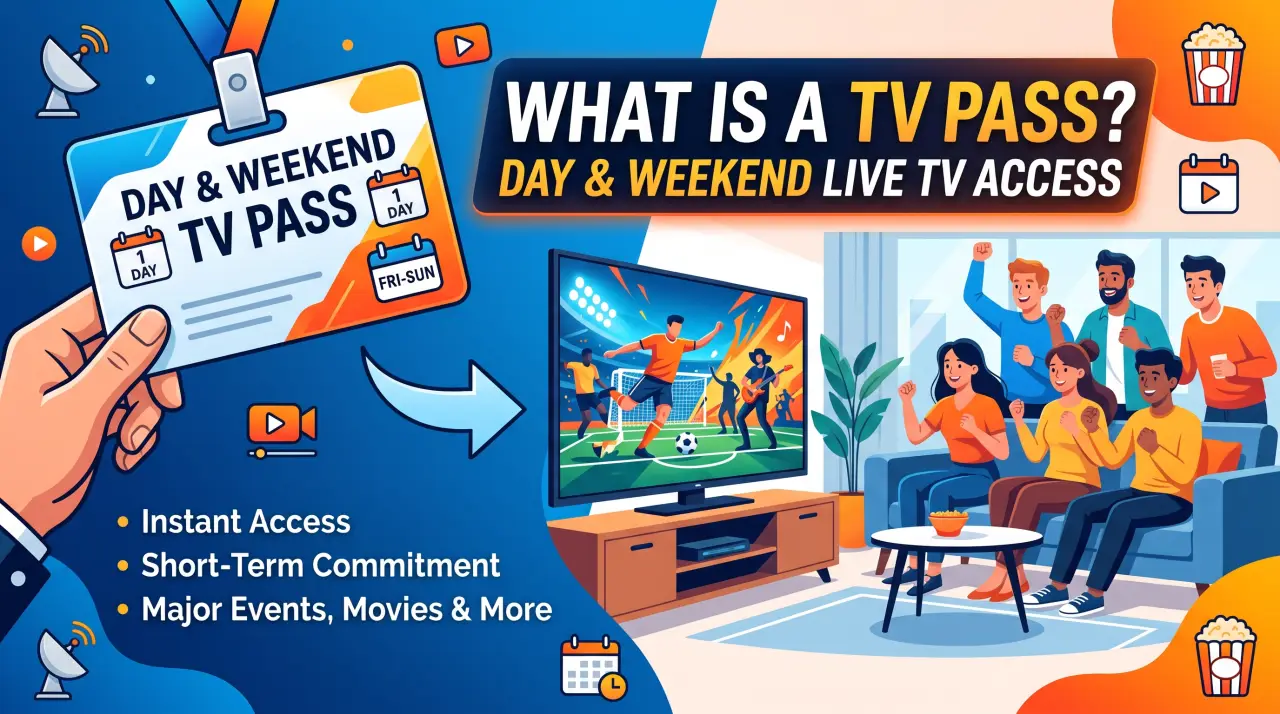
A TV pass is short-term access to live television, bought for a single day, a weekend, or a week instead of a full monthly plan. It exists for a specific situation: you want to watch one game, one awards show, or one event, and you don't want a subscription running afterward. It's a real, increasingly common pricing option, distinct from a full IPTV or cable-replacement subscription.
What a TV Pass Actually Means
The term covers pay-as-you-go access to live channels, sold in blocks of time rather than a recurring monthly charge. Instead of committing to a plan and cancelling it later, you pay once for a fixed window and the access simply ends when that window closes.
The model exists because live TV demand is often tied to a specific date, not an ongoing habit. Someone who wants to watch a single sports final has different needs than someone who watches live TV every night, and pass pricing is built around that first group.
How Day and Weekend Passes Work
Sling TV is the clearest example of this model in practice. Its Day Pass gives 24 hours of access starting from $4.99, with weekend and week-length options also available at higher prices. Live and on-demand access covers a set list of channels, similar to what you'd get on a standard plan, just capped to a shorter window.
Signing up is the same process as any streaming service: create an account, choose the pass length, and pay for that period. There's no separate hardware or setup step beyond what the service already requires — check the provider's own page for current pricing and the exact channel lineup, since both change over time.
What's Usually Included
| Pass type | Typical duration | Good for |
|---|---|---|
| Day pass | 24 hours | A single game, event, or awards show |
| Weekend pass | Friday through Sunday | A tournament or multi-day event |
| Week pass | 7 days | A short trip, or trying a service before committing |
When a Pass Makes Sense vs. When a Subscription Fits Better
A pass is the better fit if live TV is genuinely occasional for you — a handful of dates a year where you want one specific broadcast and nothing more. Paying $4.99 for a single day costs less than a month you'd barely use.
A full subscription fits better once that pattern shifts to a regular habit: sports every week, news you check daily, or a channel lineup you actually rely on. At that point the per-day math flips, and a monthly or longer-term IPTV subscription like GetTV.online's plans ends up cheaper than buying passes repeatedly, while also giving you consistent access instead of remembering to buy a new pass each time. If you're weighing a cable-replacement app against a broader IPTV subscription in general, our comparison of Hulu Live TV and an IPTV subscription covers that trade-off in more depth.
Things to Check Before You Buy a Pass
- Channel lineup: confirm the specific channel or event you want is actually included in that provider's pass — not every pass covers every network.
- Device compatibility: check the pass works on the device you plan to watch on before paying.
- Auto-renewal: some providers roll a pass into a subscription unless you cancel; check the terms before buying.
- Timing: a day pass starts counting down from purchase, not from when you start watching, so buy it close to when you'll actually use it.
If you'd rather test a full IPTV lineup before deciding between a pass and a subscription, GetTV.online's free trial is a no-commitment way to compare the experience directly.
FAQ
What is a TV pass?
A TV pass is short-term access to live TV channels, bought for a day, weekend, or week instead of a monthly subscription. It ends automatically when the paid window is over.
Is a TV pass cheaper than a subscription?
For occasional use, yes — a single day pass costs a fraction of a monthly plan. If you watch live TV regularly, buying repeated passes usually costs more over time than one ongoing subscription.
Do I need special hardware for a TV pass?
No. A pass works through the same app or device you'd use for a regular subscription with that provider — there's no separate equipment requirement.
Can a TV pass turn into a subscription automatically?
Some providers may enable auto-renewal by default. Check the specific terms before purchasing if you only want access for the fixed window.